
INTRODUCTION
Understanding how topical THC works is something more cannabis users are looking into, especially as these products become more available across the US. Applying THC directly to your skin is a very different experience compared to smoking or eating an edible, and the way your body responds is worth knowing before you try one.
Topical THC sits in its own space within the cannabis world. The products are discreet, simple to use, and involve no inhalation at all. Whether someone is dealing with soreness after a workout, stiffness from sitting too long, or just wants to explore a new part of their wellness routine, topicals offer a localized option that many people find genuinely worth trying.
This guide covers what topical THC actually is, how it interacts with your skin, what a 1:1 THC to CBD formula means, and how to apply these products properly.
Key Takeaways
- Topical THC binds to cannabinoid receptors in your skin tissue rather than entering your bloodstream, which keeps the effects focused exactly where you apply the product.
- Standard THC topicals do not produce a psychoactive high, making them a practical choice for people who want localized support without any mental impairment.
- 1:1 THC to CBD topicals deliver both cannabinoids at equal strength to the skin level at the same time, which is why many regular users prefer balanced formulas over single-cannabinoid options.
- Application timing, location, and product potency all play a role in your experience, so starting with a small amount and adjusting based on how your body responds works best for most people.
What Is Topical THC and How Is It Different from Other Cannabis Products?
Topical THC is its own category, and it behaves very differently from other cannabis formats. Before getting into how it works in the body, it helps to understand what it actually is and why it stands apart from products like edibles or inhalables.
What Does Topical THC Mean?
Topical THC refers to cannabis-infused products applied directly to the skin, including creams, lotions, balms, gels, and salves that contain THC as an active ingredient. Unlike edibles or inhalables, topicals are meant to work at the surface level of the body, targeting the area where you apply them rather than circulating through your whole system. When a product is labelled as a topical, it is intended for external use only.
This category has grown significantly in recent years, especially among people who are curious about cannabis but have no interest in smoking or feeling intoxicated. The accessibility and familiar format make topicals an easy entry point for a lot of people.
How Is It Different from Edibles or Smoking?
Each cannabis format enters and moves through your body in a completely different way. Here is a straightforward breakdown:
Topicals stay local, and the experience is focused entirely on the area where you applied the product. That is the key difference that sets them apart from every other cannabis format.
How Does Topical THC Work on the Body?
| Format | How THC Enters the Body | Onset Time | Effect Type | Psychoactive |
|---|---|---|---|---|
| Smoking/Vaping | Through the lungs into the bloodstream | 2 to 10 minutes | Whole body | Yes |
| Edibles | Through digestion, processed by the liver | 30 to 90 minutes | Whole body | Yes |
| Topicals | Absorbed into skin and surrounding tissue | 15 to 45 minutes | Localized only | No (standard topicals) |
| Transdermal Patches | Crosses the skin barrier into the bloodstream | 15 to 60 minutes | Whole body | Possible |
The skin is not just a passive barrier. It has its own network of receptors that respond to cannabinoids, which is what makes topical THC work the way it does. This section breaks down the actual mechanism behind how topical THC interacts with your body.
How Does THC Interact with Skin Receptors?
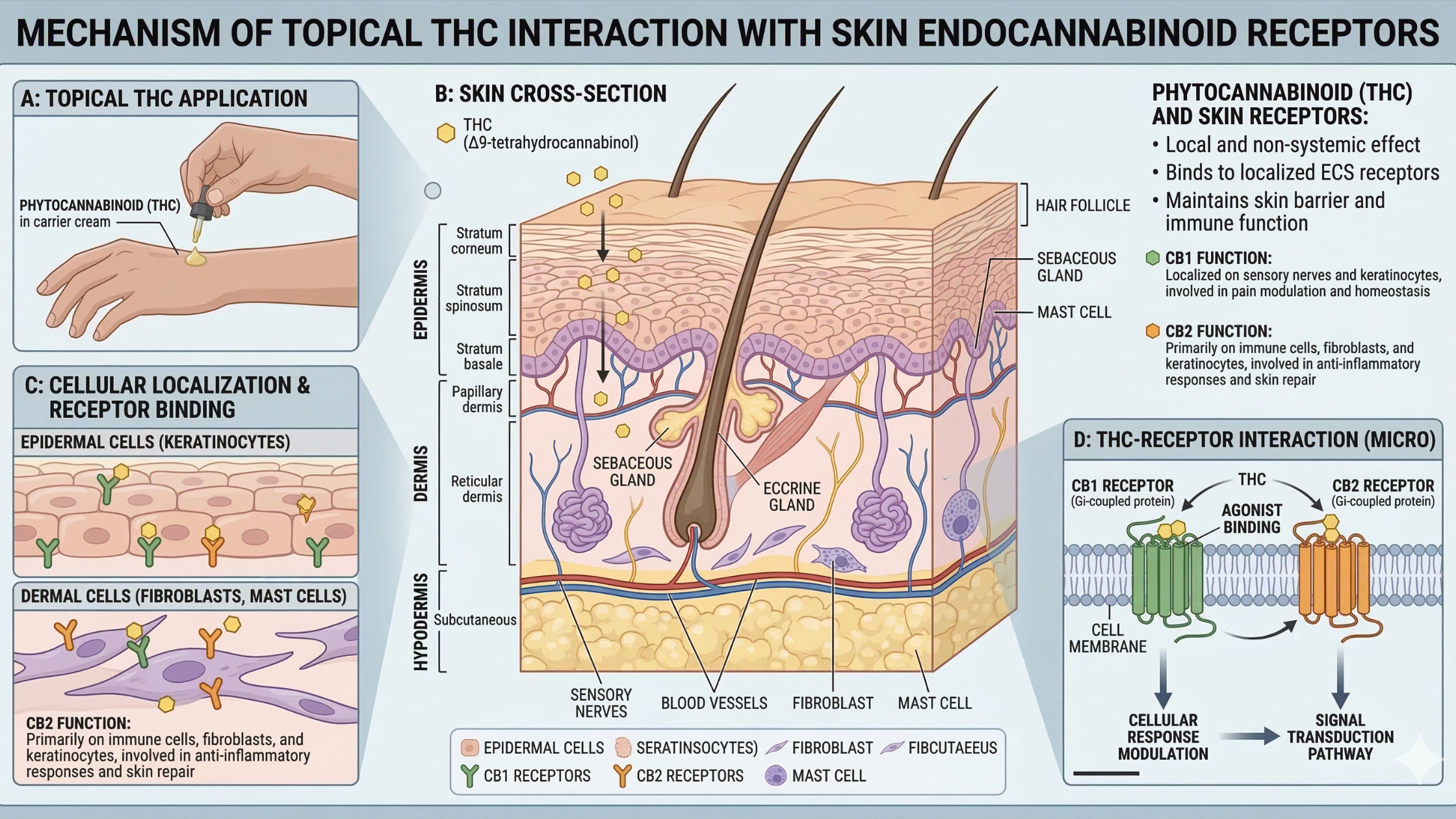
Your skin contains endocannabinoid receptors as part of the broader endocannabinoid system throughout your body. When you apply a THC topical, the THC molecules bind to these receptors in the skin and surrounding tissue.
- CB1 and CB2 receptors are both present in skin tissue and respond to THC upon contact.
- CB2 receptors are especially concentrated in immune cells and peripheral tissues, including the skin, which is why topical THC produces localized sensations rather than full-body effects.
- The interaction happens at a cellular level in the tissue where you applied the product, not in your central nervous system.
- Some topicals include added ingredients like menthol, camphor, or arnica that work alongside THC and contribute to how the product feels on contact.
Does Topical THC Enter the Bloodstream?
For standard topicals like creams and balms, the answer is generally no, or only in trace amounts too small to be significant. The skin acts as a protective barrier, and THC applied to the surface does not easily cross the dermis layer to reach the bloodstream.
One exception worth knowing about is transdermal patches, which are specifically formulated to push cannabinoids through the skin barrier and into the bloodstream. A lotion you rub in works locally, while a transdermal patch is designed for systemic effects, so always check the product label to confirm which type you are using.
How Long Does It Take to Feel Effects?
Most people notice something within 15 to 45 minutes of applying a THC topical. A few factors affect that timeline:
- Skin thickness: Areas with thinner skin, like the wrists or behind the knees, may absorb the product a little faster, while thicker skin on the heels or palms can slow things down.
- Skin condition: Applying to clean, dry skin generally helps with absorption compared to applying over lotion or sweat.
- Product formulation: Higher-potency formulas or products with absorption-boosting ingredients may produce a more noticeable response sooner.
- Amount applied: Using too little may result in a subtler or slower sensation at the site.
What Are THC and CBD 1 to 1 Topicals and Why Are They Popular?
Balanced cannabinoid formulas have become one of the most requested options in the topical market. There are good reasons for that, and it starts with understanding what the ratio actually means and what both cannabinoids bring to the experience.
What Does a 1 to 1 THC to CBD Ratio Mean?
A 1:1 ratio means the product contains equal amounts of THC and CBD, so a 1000mg THC to 1000mg CBD topical has the same concentration of each cannabinoid throughout the formula. Both THC and CBD interact with endocannabinoid receptors in the skin, though they work through slightly different pathways.
Having both present means the product engages with skin receptors through more than one mechanism at the same time. CBD does not bind to CB1 receptors the same way THC does. Instead, it modulates receptor activity and interacts with other molecular pathways in the tissue, adding another layer to the overall experience at the skin level.
Why Do People Choose Balanced Formulas?
People choose 1:1 formulas because they want both cannabinoids working at the same spot on their skin. CBD and THC each interact with different pathways in the skin tissue, so having both present means the product engages with your endocannabinoid system through multiple routes at once. This combined approach is sometimes called the entourage effect, where cannabinoids work more effectively together than they do alone.
For topical use specifically, CBD adds its own calming properties to the tissue while THC activates CB1 and CB2 receptors directly. The two cannabinoids support each other at the application site, which creates a fuller, more rounded experience compared to using either one by itself. Many regular users find that balanced formulas feel more complete and consistent, which is why they keep reaching for 1:1 products over single-cannabinoid options.
Are 1000mg THC + 1000mg CBD Topicals Strong?
1000mg is a higher concentration, but context matters with topicals. That number refers to the total amount in the entire container, not per application, so if a jar contains 100 servings, each application works out to roughly 10mg THC and 10mg CBD. Higher concentration products suit people who want a more noticeable localized experience or who apply the product regularly across a larger area.
They also tend to stretch further per container, making them a practical option for people who use topicals as part of a consistent daily routine.
What Are the Most Popular 1 to 1 Topical Options Available?
There are a few standout products in the 1:1 topical space worth knowing about. Each one from the Ayrloom line carries the same balanced 1000mg THC and 1000mg CBD formula but fits slightly different moments in your routine.
The Restore formula is designed for people who want a consistent, reliable topical experience that fits into their daily routine. It works well for those stepping up from a lower-potency product or anyone building a regular practice with topicals.
- Balanced Potency: This formula delivers equal parts THC and CBD at 1000mg each, providing balanced cannabinoid interaction at the skin level.
- Everyday Use: The product works well as an everyday option for addressing general muscle tension or stiffness throughout the body.
- Step-Up Option: Restore is particularly suitable for people moving up from lower-potency topicals who want more noticeable localized results.
- Smooth Absorption: The texture absorbs into skin smoothly without leaving a heavy or greasy residue behind.
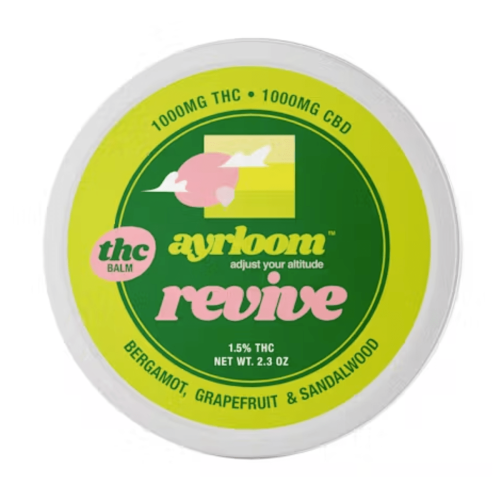
The Revive formula is geared toward post-activity recovery and fits naturally after physical exertion. Many active people use this one after workouts or long days to support their wind-down routine with a localized application.
- Post-Activity Formula: The formula is specifically designed for use after physical activity, exercise, or demanding work shifts.
- Target Areas: Revive targets common trouble spots like tired legs, overworked shoulders, and tight back muscles after exertion.
- Efficient Application: The high potency at 1000mg per cannabinoid means you need less product per application compared to lower-concentration options.
- Recovery Support: This topical fits naturally into post-workout routines alongside stretching, hydration, and active recovery practices.
The Rescue formula is built for targeted, focused applications when you need support in a specific spot. It delivers the same balanced potency but is intended for moments when you want to zero in on one particular area.
- Targeted Application: Rescue delivers 1000mg THC and 1000mg CBD in a formula meant for pinpointed, precise application to specific areas.
- Focused Support: The product works best when you need focused support in one particular spot rather than broad coverage across large muscle groups.
- Consistent Strength: The balanced potency allows for consistent results without requiring large amounts of product per use.
- Localized Relief: This formula suits people who experience localized discomfort in joints, specific muscle areas, or other concentrated zones.
What Are the Common Uses of Topical THC?
People use topical THC for a range of everyday situations. The localized nature of the product makes it a practical fit for targeting specific areas of the body, and many users have worked it into their regular routines in ways that feel genuinely useful.
Can Topical THC Help with Muscle Soreness?
Many people apply THC topicals directly to sore muscles after exercise or physical work, going right onto the tired quad, tight hamstring, or overworked shoulder. Users often describe a warming or soothing sensation at the site, which makes it a practical option for anyone who wants to address a specific area without taking something that affects the whole body.
To be clear, topical THC is not a medical treatment and is not intended to diagnose or cure any condition. What it offers is a localized sensory experience that many people find supportive as part of a general post-activity routine.
Is Topical THC Used for Joint Discomfort?
Joints like the knees, elbows, and wrists are common application sites because the skin and tissue around them contain cannabinoid receptors. This means topical THC interacts in those areas the same way it does on muscle tissue, making it a targeted option for people who experience general stiffness or discomfort in those spots.
These products are not a replacement for medical advice or professional treatment. If you have a chronic condition affecting your joints, speaking with a healthcare provider before adding any cannabis product to your routine is always the right move.
Can It Support Post-Workout Recovery?
Post-workout recovery looks different for everyone, and THC topicals fit naturally into this kind of routine because they are easy to apply, non-intoxicating in their localized form, and can be used immediately after a session.
The sensory experience of applying a warming or cooling topical to worked muscles is something many active people find genuinely useful as part of their wind-down process. How well they work for you comes down to your body and how you personally respond to the product over time.
What Effects Should You Expect from THC Topicals?
People sometimes come in with expectations shaped by other cannabis formats, and topicals are a different experience altogether. Knowing what is actually normal helps you use the product with confidence and realistic expectations.
What Does Topical THC Feel Like on the Skin?
The most common sensations are warmth, cooling, a gentle tingling, or an easing of tension at the application site. Many products include additional ingredients like essential oils, menthol, or botanical extracts that add to these sensations and make the overall experience feel more complete.
There is no head high, no shift in perception, and no intoxication involved. The experience is grounded and entirely physical, focused on the area where the product was applied.
How Long Do the Effects Last?
The duration varies from person to person, but here are the main factors that influence how long the effects stick around:
- Potency: Higher-concentration products at 1000mg tend to produce longer-lasting sensations than lower-potency options.
- Amount applied: More product generally means a more sustained experience at the application site.
- Skin type: People with drier skin sometimes notice longer-lasting effects because the product absorbs more slowly.
- Activity level: Physical movement or sweating in the area can shorten the window of effect.
Most users report sensations lasting anywhere from one to four hours before reapplication feels necessary.
Can You Reapply THC Topicals Safely?
Yes, most topical THC products can be reapplied as needed throughout the day. Because they work locally and minimal systemic absorption occurs with standard topicals, the risk of overconsumption is much lower than with ingestible cannabis products.
Following the manufacturer’s usage guidelines is still a good habit, particularly when trying a new product for the first time.
Who Should Consider Using THC Topicals?
Topicals are one of the more accessible cannabis formats available, and they tend to appeal to a wide range of people for different reasons. A few groups in particular find them especially worth considering.
Are THC Topicals Good for Beginners?
Topicals are often a comfortable starting point for people new to cannabis because there is no smoke, no guesswork around dosing an edible, and no intoxicating effect to manage. You apply it, notice how your skin and body feel, and adjust from there based on your own experience.
Starting with a small amount on a modest-sized area makes the most sense for first-time users, paying attention to how your skin responds and whether you notice any sensitivity to the other ingredients in the formula.
Are They Suitable for People Who Do Not Want to Smoke?
Topicals are completely smoke-free and involve no inhalation, making them a practical alternative for people interested in cannabis who have no interest in smoking or vaping. This makes them popular with people who have respiratory sensitivities or simply prefer a more familiar, cream-based format that fits easily into a daily routine.
The experience is grounded entirely in what you feel at the skin level, with no smoke or vapour involved at any point.
Can Older Adults Use THC Topicals?
Many older adults are drawn to topical cannabis products because there is no smoke, no altered mental state, and the format looks and feels like creams and gels they may already use regularly. That said, older adults taking prescription medications or managing underlying health conditions should consult a healthcare provider before using any cannabis product, as some medications can interact with cannabinoids.
A straightforward conversation with a doctor keeps everything safe and well-informed before starting any new product.
How Do You Apply Topical THC Correctly?
Applying a topical is straightforward, but a few small habits make a real difference in how well the product works for you. Getting the amount, location, and aftercare right helps you get the most out of each use.
How Much Topical THC Should You Use?
- Start with a small amount, roughly the size of a dime to a quarter, for a moderate-sized area.
- Massage the product thoroughly until it fully absorbs into the skin.
- Wait 30 to 45 minutes before deciding whether to apply more, giving yourself a clear sense of the initial response.
- Increase the amount gradually over time based on how your body responds, rather than adding more all at once.
- For larger areas like the back or thighs, use a bit more product to ensure even coverage across the surface.
Where Should You Apply It on the Body?
- Apply directly to the area where you want to feel the localized effect, since placement matters with topicals.
- Common application sites include the lower back, shoulders, knees, calves, hands, and feet.
- Avoid broken or irritated skin, as applying product to compromised skin may cause discomfort.
- Keep away from mucous membranes, eyes, and sensitive areas unless the label specifically states otherwise.
- Always read the product label before applying to any area you are unsure about, especially for the first time.
Should You Wash Hands After Application?
Yes, washing your hands after applying a THC topical is a good habit, especially before touching your face or eyes. If you are applying it to your own hands or fingers and want the product to absorb there, massage it in fully and let it sit before touching other surfaces or people nearby.
Final Thoughts
Knowing how topical THC works gives you a solid foundation for using these products with confidence. THC interacts with cannabinoid receptors in the skin and surrounding tissue, offering a localized experience without systemic effects for most standard topicals.
1:1 THC to CBD formulas, like the Ayrloom Restore, Revive, and Rescue options, bring both cannabinoids into the experience at the skin level at the same time. High-potency formulas at 1000mg THC and 1000mg CBD are a practical choice for people who want consistent, reliable results from regular use.
Using topicals responsibly means starting with a modest amount, following label instructions, and checking in with a healthcare professional if you have medical conditions or take prescription medications. Always purchase from licensed, legal cannabis retailers and follow your province’s regulations around cannabis use.
FAQs
How does topical THC work in the body?
Topical THC binds to CB1 and CB2 cannabinoid receptors located in the skin and surrounding tissue. The interaction stays localized, meaning effects remain close to where you applied the product. In standard topicals like creams or balms, THC does not typically enter the bloodstream in significant amounts.
Will topical THC show up on a drug test?
Standard topicals are generally considered low risk for triggering a positive drug test because THC does not significantly enter the bloodstream through normal skin absorption. Transdermal patches work differently, as they are specifically designed to deliver THC systemically. If you are subject to drug testing, consulting your employer’s guidelines and speaking with a healthcare professional is the safest approach.
Can topical THC make you high?
No. Standard topical THC products do not cross the skin barrier in amounts sufficient to reach the brain and produce psychoactive effects. Using a THC cream or balm will not leave you feeling intoxicated or mentally impaired in any way.
How often can you use THC topical creams?
Most people apply topical THC one to three times per day based on the product and their routine. Because the effects are localized and systemic absorption is minimal, frequent use is generally well tolerated. Following the product’s usage guidelines and paying attention to how your skin feels over time keeps things on track.
What is the difference between THC cream and THC balm?
The main difference is texture and base ingredients, where creams are lighter, water-based, and absorb quickly, while balms are thicker, oil or wax-based, and tend to sit on the surface longer. Balms feel more protective and coating, while creams feel lighter and less greasy on the skin. Both deliver THC to skin receptors effectively, and the choice often comes down to personal preference.
Are 1 to 1 THC CBD topicals better than THC only products?
Not necessarily better, just different. A 1:1 formula brings both cannabinoids into the experience at the same time, which many users prefer for the combined interaction at the skin level. Personal preference and how your body responds will guide which option suits you best over time.
Can you use THC topicals every day?
Yes, daily use is common among people who incorporate topicals into a consistent wellness or recovery routine. There is no widely established concern about tolerance or dependency with topical use. Rotating application sites with frequent use can help prevent localized skin irritation over time.
How do you store THC topical products properly?
Store THC topicals in a cool, dry place away from direct sunlight and heat, as excess heat can break down cannabinoids and change the product’s texture over time. Most topicals do not require refrigeration, but keeping them out of a hot car or sunny windowsill preserves their quality. Keep the lid tightly closed between uses to prevent the product from drying out prematurely.